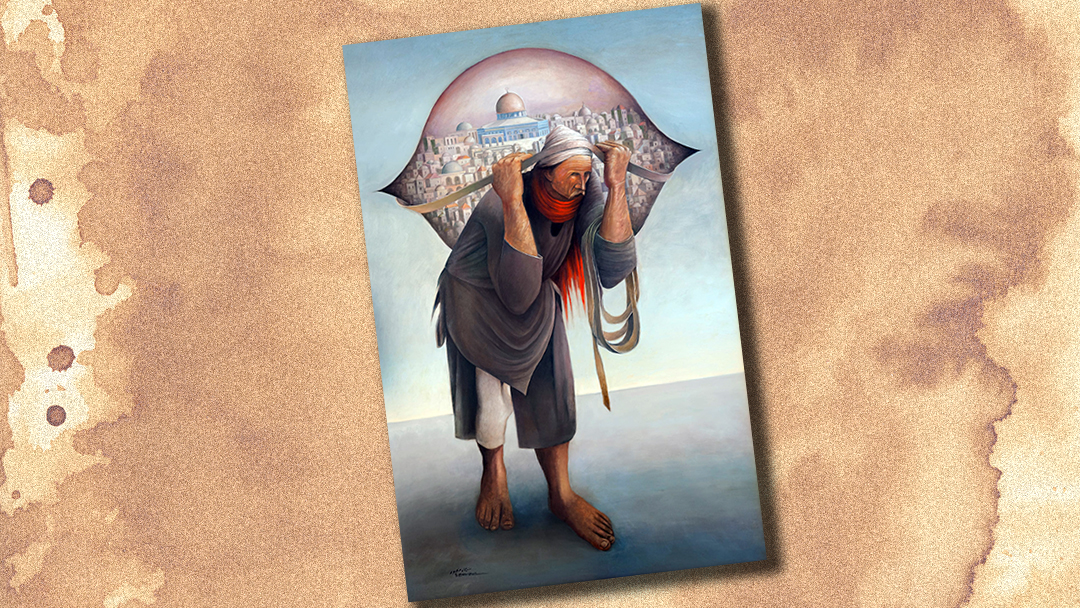
Sliman Mansour, “Jamal al-Mahamel” (Camel of Hardship) (1973)
On October 7, 2023, Israeli citizen Maoz Inon received a call from his father. Maoz’s parents were hiding in their home. It was Maoz’s last conversation with his father. Soon after the call, Hamas fighters murdered Maoz’s parents and burnt down their home just outside the Gaza Strip.
These two men, once consumed by rage, now call each other brothers. They live in that strange country called Peacebuilding, where partisans of violent extremes reject them and grieving families—Israeli citizens and stateless Palestinians—find common ground. They remind me of two friends I encountered in Jerusalem years ago. You can read about that encounter here.
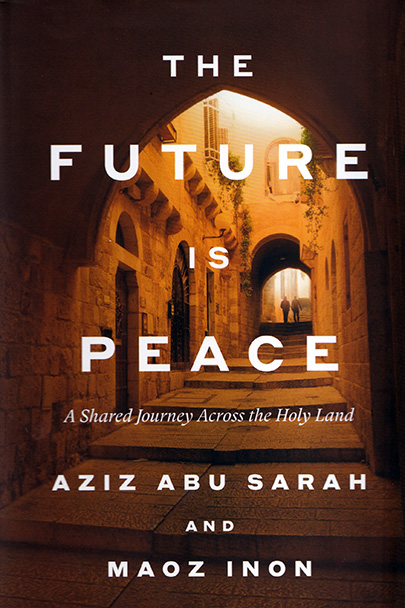
A Shared Journey
To get a quick introduction to these two men and their friendship, watch their interview with Democracy Now host Amy Goodman. In visits to Israel/Palestine, I learned many Palestinians only meet Israelis at checkpoints manned by armed Israeli military. And many Israelis have little or no contact with Palestinians, who are about twenty percent of Israel’s population. You can learn more about Israeli Palestinians’ living conditions here.
Still fewer Israeli Jews have any experience of life in the West Bank, unless they move to settlements, which, according to international, are illegal. So Inon’s visit to the West Bank in 2022 was a big turning point for him. When his parents were killed the following year, his rage was directed primarily against Israel’s treatment of Palestinians since the days of Jewish right-wing underground movements’ violence against Palestinians in 1948.
Turning Points
He enrolled in a class for new Jewish immigrants to Israel. He was the only Palestinian. But the teacher welcomed him warmly in Arabic. “… it was the first time I had been treated like a human being by an Israeli” (119).
Late in the book, Abu Sarah describes his visit to Yad Vashem. It is unheard of for a Palestinian to venture into West Jerusalem, let alone to visit the Center. Abu Sarah feared that feeling empathy for Jewish “enemies’” suffering meant betraying his own people. And he knew that while the world is aware of the Holocaust through such memorials, there is no memorial to places such as nearby Deir Yassin, where Israeli militiamen massacred Palestinians in 1948.
Nevertheless, Abu Sarah walked in. Heart racing, “I found myself identifying with their suffering. I forgot that they were Jews, forgot that they were my so-called enemies” (200). He learned that “having empathy for what the Jews had suffered did not make me disloyal to my people, and it did not make me weak—on the contrary, my empathy made me stronger” (202).
Years later, Yad Vashem will have a profound effect on Abu Sarah’s own father and many others. Do yourself a favor: read it.
Loss and Hope
And as the bombs crash all over the world today the real wise guys know that we’ve all got to go chasing stars again …
Who are the wise? What could be madder than a genocide that delivers death to a little girl on a phone in a car full of corpses, calling for help? Abu Sarah and Inon understand they’re trying something “sane” people dismiss as madness. Chasing stars. Crossing borders. Quixotic? Fools for peace. Why not?
Sliman Mansour’s “Camel of Hardship” image from Hyperallergic.
If you wish to learn more about Jews, Christians, and Muslims in the Holy Land and visions for healing and peace, click here.
0 Comments